Dental Bonding
Conservative tooth-colored bonding for selected chips, shape changes, spaces, and aesthetic refinements.

Bonding can make conservative aesthetic changes.
Tooth-colored composite can repair selected chips, modify shape, close small spaces, cover localized discoloration or refine proportions.
- Additive smile changes
- Chip repair
- Small space closure
- Shape refinement
- Trial aesthetic changes
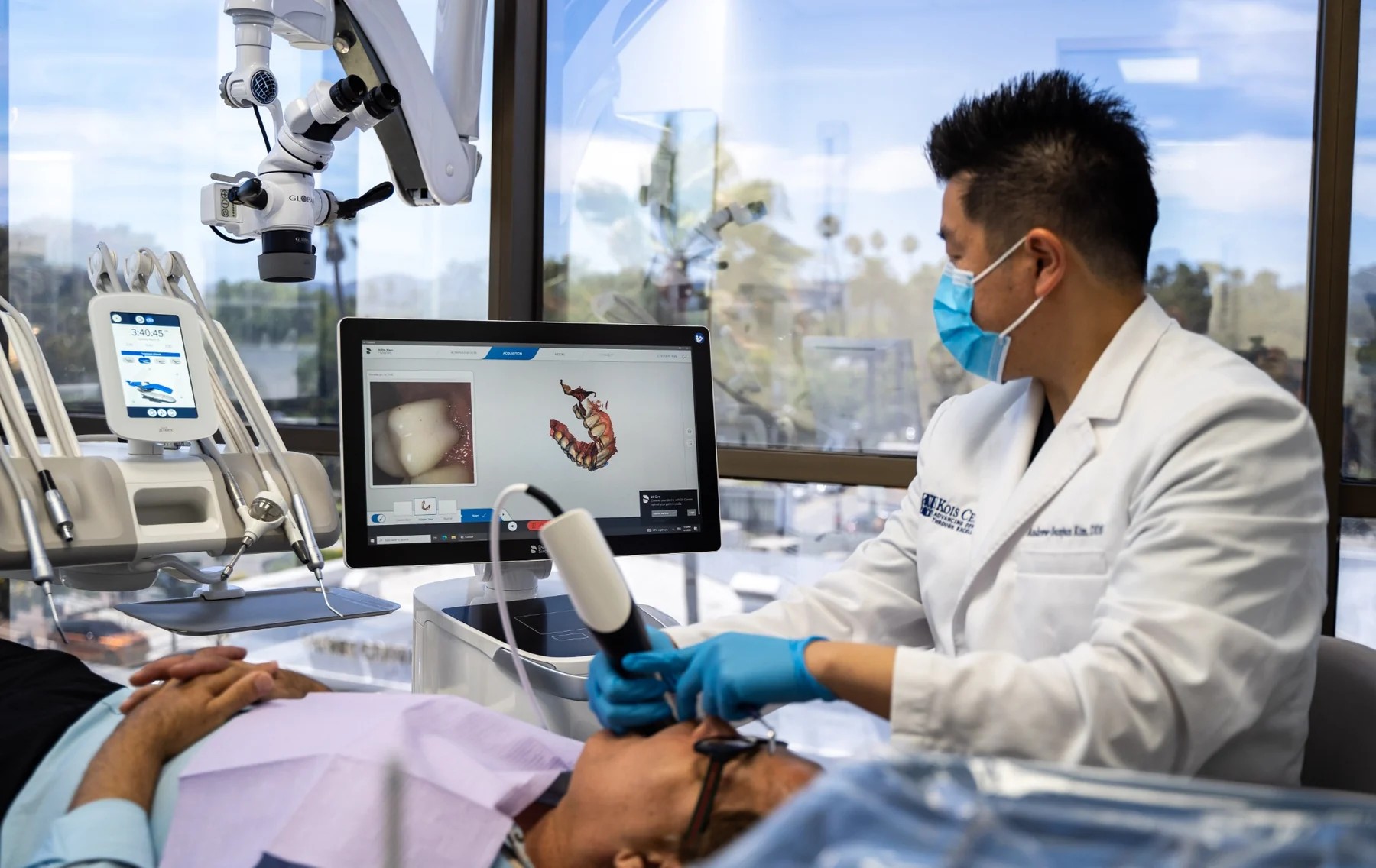
Composite and porcelain have different strengths.
Bonding is repairable and often conservative, but it can stain, wear or chip over time. Porcelain can offer different optical and wear properties but usually involves greater cost and may require tooth preparation.
The bite still matters for a small cosmetic change.
Edge position, tooth contacts and functional movements can affect whether bonding is likely to remain stable.
What patients ask about dental bonding
How long does dental bonding last?
Longevity varies with location, bite, habits, material volume, staining exposure and maintenance. Bonding is often repairable when small defects occur.
Does bonding damage teeth?
Many bonding procedures are additive or require minimal tooth alteration, but exact preparation depends on the case.
Bonding or veneers?
Bonding can be more conservative and repairable; porcelain may provide different optical and wear properties. The best choice depends on goals and tooth condition.